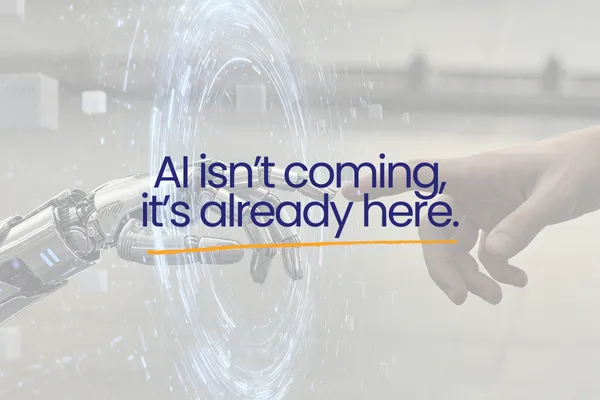
How AI Is Transforming Industries in 2026
Artificial Intelligence is no longer a futuristic concept, it’s an operating system for modern business. By 2026, AI is not just optimizing processes; it’s reshaping entire industries, redefining roles, and accelerating innovation at a pace never seen before. Companies that understand how AI is transforming their sector will gain a decisive advantage. Those that don’t risk falling behind faster than ever.
1. AI Is Shifting From Automation to Decision-Making
In earlier years, AI focused on automating repetitive tasks.
In 2026, AI increasingly supports, and in some cases makes strategic decisions.
Examples include:
Dynamic pricing models in real time
Predictive demand forecasting
Automated risk assessment and fraud detection
AI now augments human judgment rather than simply replacing manual work.
2. Healthcare: From Reactive to Predictive Care
Healthcare is one of the most transformed industries by AI.
Key changes include:
Early disease detection through pattern recognition
Personalized treatment plans based on genetic and behavioral data
AI-powered diagnostics reducing human error
The shift is clear: healthcare is moving from treating illness to preventing it.
3. Manufacturing and Supply Chains Become Self-Optimizing
AI-driven manufacturing systems are learning, adapting, and optimizing themselves.
In 2026, AI enables:
Predictive maintenance that prevents downtime
Real-time inventory optimization
Smarter logistics routing with lower emissions
Supply chains are becoming resilient, flexible, and data-driven, even under global disruptions.
4. Finance: Speed, Accuracy, and Trust at Scale
Financial institutions are using AI to balance speed with security.
AI is transforming finance through:
Automated credit risk analysis
Real-time fraud detection
Algorithmic trading and portfolio optimization
Trust is increasingly built through transparent, explainable AI systems rather than manual controls.
5. Retail and Customer Experience Become Hyper-Personalized
Retailers now compete on experience, not just price.
AI enables:
Personalized recommendations at scale
Demand forecasting to reduce waste
Conversational AI for customer support 24/7
Customers in 2026 expect brands to understand them, instantly and contextually.
6. AI Is Redefining the Nature of Work
Rather than eliminating jobs, AI is redefining roles.
Key trends:
Routine tasks handled by AI agents
Humans focused on creativity, strategy, and relationships
New hybrid roles combining business knowledge with AI literacy
The most valuable skill is no longer technical expertise alone, it’s the ability to work alongside AI.
7. Innovation Accelerates Through AI-Driven Experimentation
AI lowers the cost of experimentation.
Companies can now:
Test ideas faster using simulations
Analyze market feedback in real time
Iterate products before full-scale launches
Innovation cycles that once took years now take months or weeks.
In 2026, AI is not a competitive advantage, it’s a baseline capability. The companies shaping the future are those that:
Integrate AI strategically
Invest in human–AI collaboration
Use data responsibly and ethically
Artificial Intelligence is not replacing innovation. It is amplifying it.
